
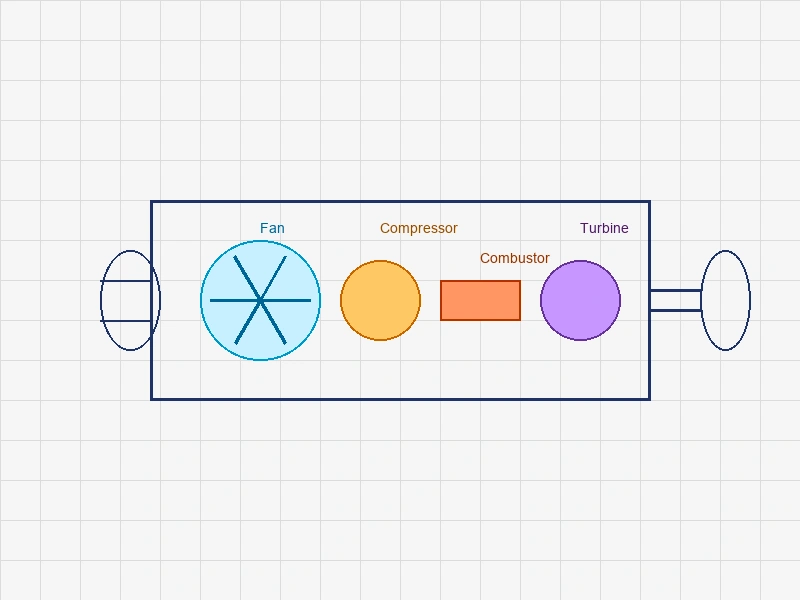
At the 2026 Singapore Airshow, the global aviation industry will witness a significant technological milestone. CFM International, Airbus, and the Civil Aviation Authority of Singapore signed a Memorandum of Understanding to announce that Singapore will become the world’s first test site for open-rotor engines, marking a new era for aero-engine technology.
Open-type fan engine: a breakthrough in traditional design
The open-fan engine, also known as a propfan engine or ductless fan engine, represents a revolutionary innovation in engine design. Unlike traditional ducted designs, this new engine eliminates the limitations of an external cowling, allowing for the installation of larger fan blades. This breakthrough design results in significant performance improvements:
- Fuel efficiency improved by 20%+ : By increasing the fan diameter and optimizing airflow design, the new engine can save more than 20% of fuel compared to current commercial engines, which is crucial for cost control and sustainable development in the global aviation industry.
- Dual optimization of emissions and noise : The open design significantly reduces emissions and flight noise through improved bypass ratio and airflow characteristics, resulting in a better impact on the surrounding communities and the global environment.
- Clean energy compatibility : The engine is more compatible with sustainable aviation fuel (SAF), hydrogen, and future hybrid power systems, laying a solid foundation for the aviation industry’s green transformation.
China’s independently developed engines are making rapid breakthroughs.
Meanwhile, the Aviation Industry Corporation of China (AVIC) has also made significant progress in the independent development of engines. At the end of 2024, China’s first domestically produced 600-kilogram thrust turbofan engine successfully completed its first ignition. This engine has the following characteristics:
- High-altitude, high-speed, and long-endurance capabilities : It can operate stably at altitudes above 15,000 meters, speeds above Mach 0.8, and long endurance, providing powerful power support for high-end UAVs in the 1.5-4 ton class.
- Accelerating the development process : The engine is scheduled to complete its maiden flight in June 2025 and complete its final designation in 2026. Compared to the 8-10 year development cycle of similar international products, China’s development speed is remarkable.
AES100 turboshaft engine: A new option for civil aviation
Among China’s scientific and technological innovation achievements, the AES100 advanced civil turboshaft engine was a key project released at this year’s Zhongguancun Forum. This engine is specifically designed for the needs of civil and general aviation, representing China’s strategic layout in the diversified application of engines.
Industry prospects and development trends
Engine technology will exhibit several distinct development trends by 2026:
- Multiple technological approaches are being pursued in parallel : from traditional internal combustion engines to open fan designs and clean energy power systems, the industry is forming a diversified technological ecosystem.
- Sustainability has become a core driving force : fuel efficiency, emissions control, and clean energy compatibility have become essential elements in the design of new engines.
- International technological cooperation is deepening : examples such as Singapore becoming a global open fan engine testing base show that the future development of engine technology will rely more on global cooperation.
- Enhanced domestic innovation capabilities : China’s rapid progress in the independent research and development of high-thrust engines signifies a profound change in the global engine industry’s competitive landscape.
Summarize
The engine industry in 2026 stands at a crucial crossroads. Whether it’s CFM International’s open-fan design or the breakthroughs in independent innovation by China Aviation Industry Corporation, they all point in the same direction: achieving higher efficiency, lower emissions, and adaptability to future clean energy sources through technological advancements. These developments will not only transform the technological foundation of the aviation industry but will also have a profound impact on global energy efficiency and environmental sustainability.


